雅韵(Yayun)
for pipa and bronze bells
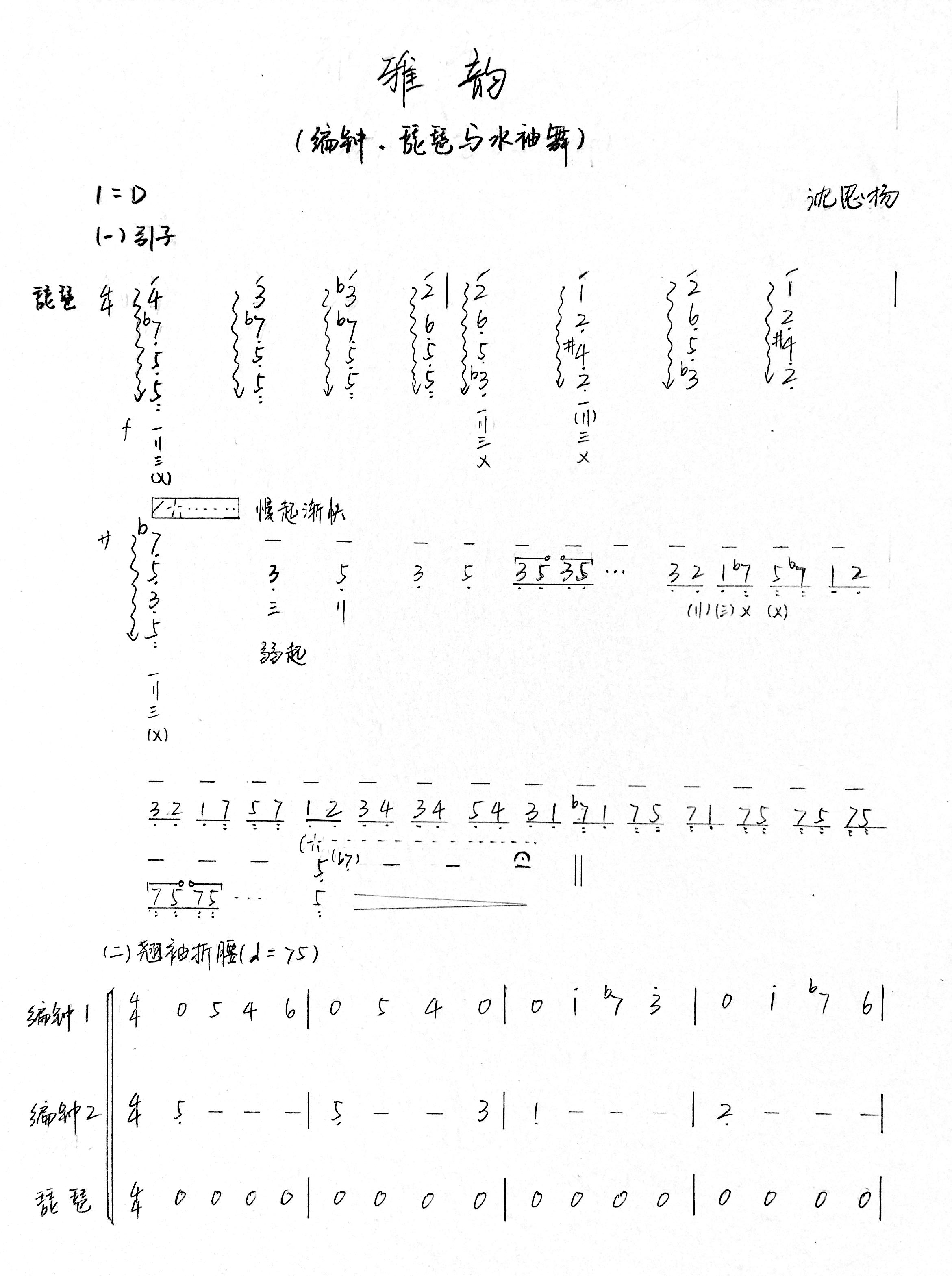
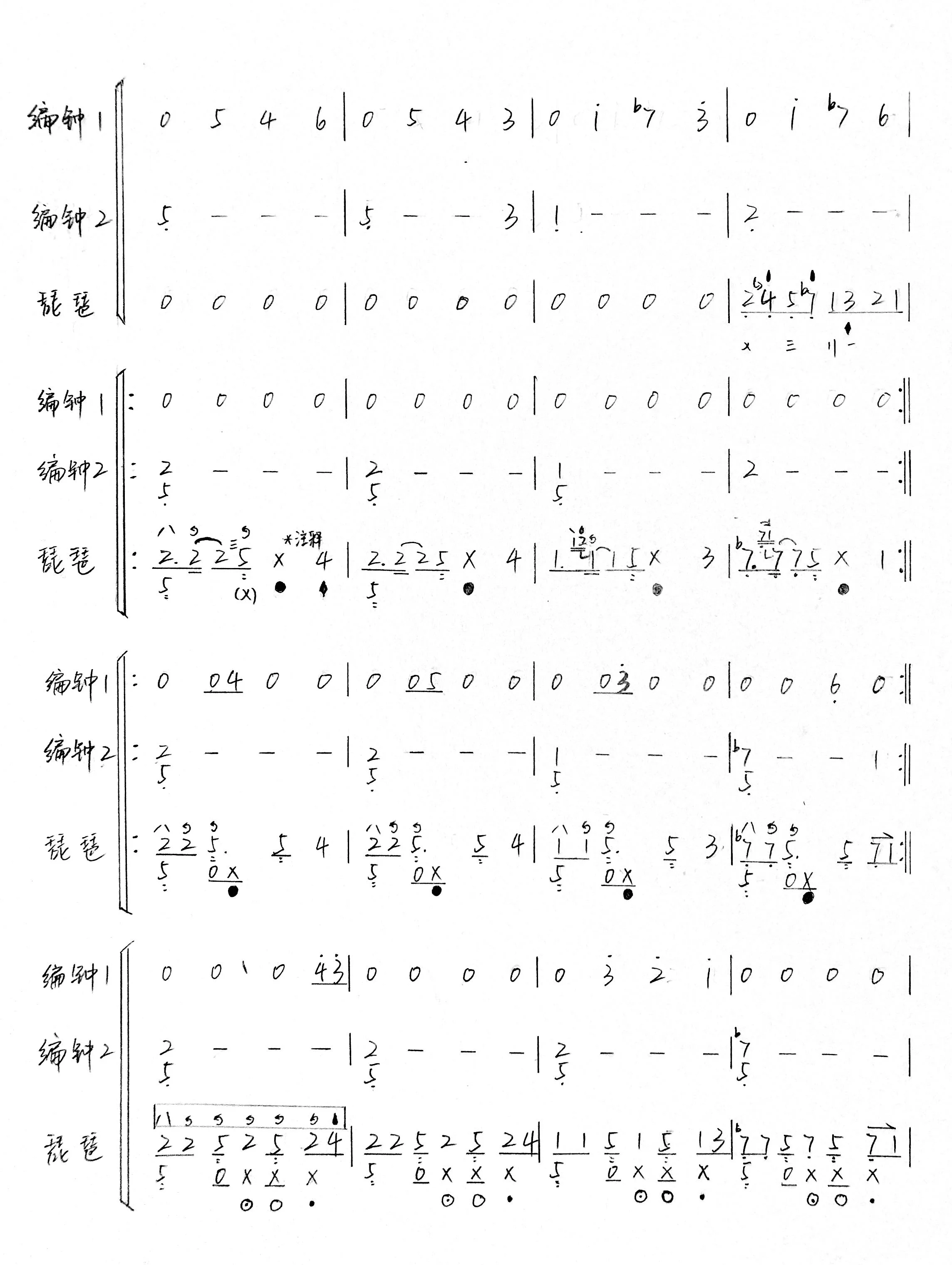
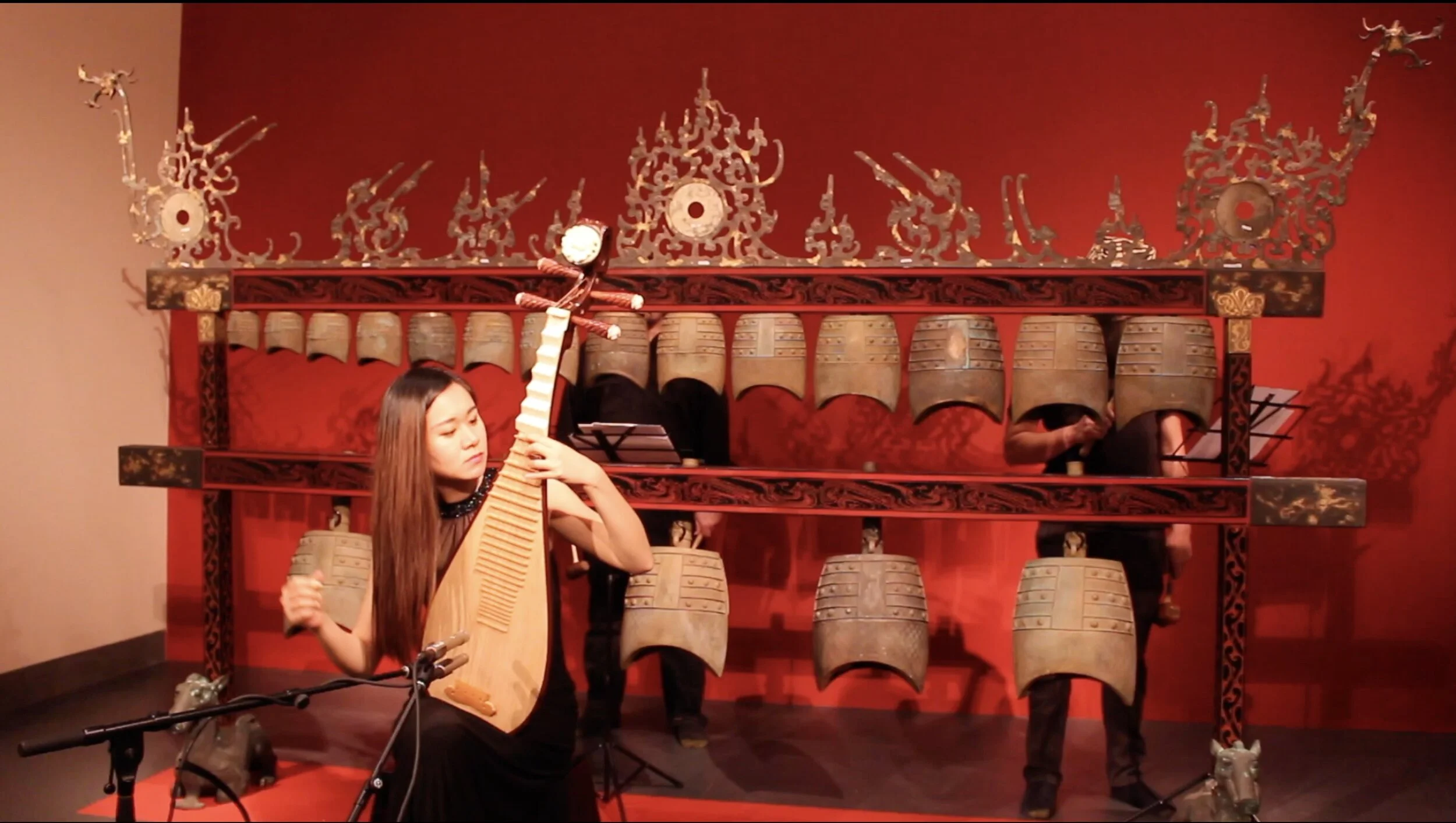
Commissioned by the San Francisco Asian Art Museum and premiered at the special exhibition “Tomb Treasures: New Discoveries from China’s Han Dynasty” in 2017, Yayun (雅韵) is a duet for pipa and Han Dynasty bronze bells. Ya means “elegant, graceful” in Chinese, and Yun means “rhyme, harmony or charm”. Yayun was inspired by yayue (雅乐), a Chinese classical court dance and music in an ancient tuning system, but it is a modern interpretation of an ancient art form that incorporates untraditional pipa playing techniques to create percussive sound effects and polyphony in harmonies.
The piece was performed on a set of replica bells which was recreated after the original set. The Han Dynasty bronze bells are famous for their remarkable ability to produce two different musical tones on one single bell, depending on where the bell is struck. There are two scales on this set of replica bells. The main scale (when hitting the front of the bells) consists of six notes in three octaves, which resemble the Pythagorean tuning of D, E, F, G, A and C with cents deviations. The secondary scale consists of F#, G#, A#, B, C# and D# in three octaves, which are produced when hitting on the side of the bells.